

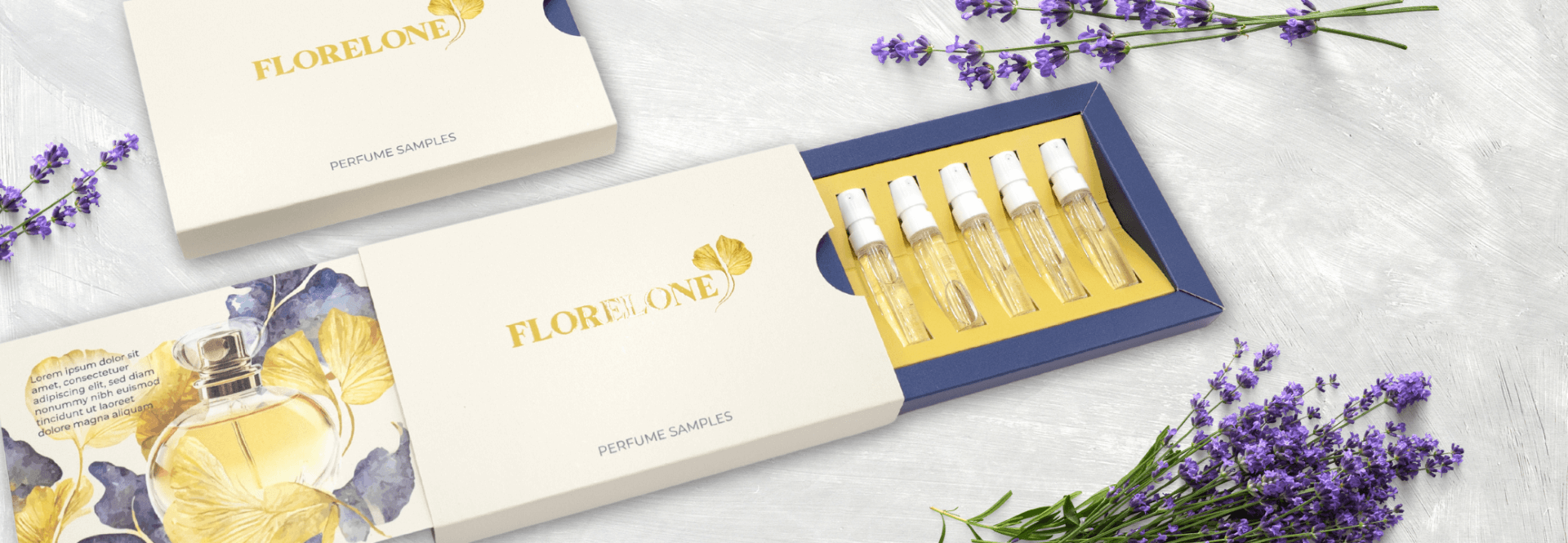
Perfume samples are often the first moment when a customer truly encounters a fragrance. They may have already seen the bottle, know the brand name, read the description of the fragrance notes, or come across an advertisement. But only when they spray the fragrance onto their skin do they begin to make the real decision.
That is why the way we present a sample matters.
We do not see a perfume sample as just a simple add-on, but as a small invitation into the world of the brand. It can be a sales tool, part of a product launch campaign, a gift for the customer, or a way to present an entire fragrance collection. Depending on the goal, we help choose the packaging format that best supports the brand’s needs.
Below, we present 5 inspirations worth considering from simple fragrance cards to more elaborate discovery sets.
1. Fragrance card with a vial when the sample needs to be simple, clear, and budget-friendly
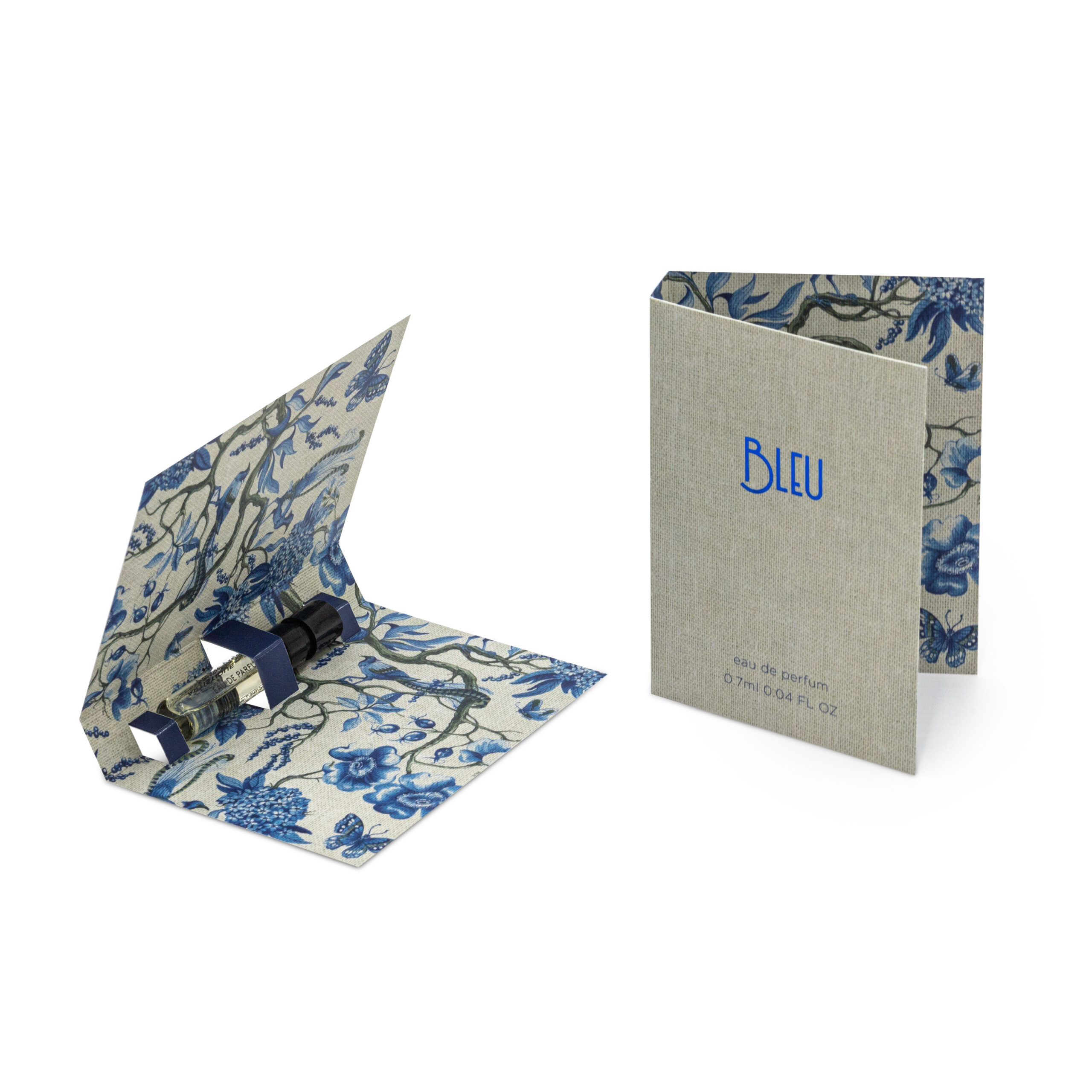
This is one of the most universal packaging formats for perfume samples. The fragrance vial is placed in a cardboard card, which can be flat, folded, or closed. This gives the sample context: we have space for the fragrance name, logo, notes, a short description, and, if needed, a QR code leading to the product page.
This format works especially well when samples are added to online orders, handed out at trade fairs, or used in promotional campaigns.
The biggest advantage of a fragrance card? It is lightweight, practical, and very flexible. We can design it in a minimalist, premium, colorful, artistic, or educational style depending on the character of the brand and the fragrance.
If we are looking for a solution that is aesthetic, yet economical and easy to distribute, a fragrance card will be a very good choice.
2. Mini cardboard box when a samples needs to look more premium
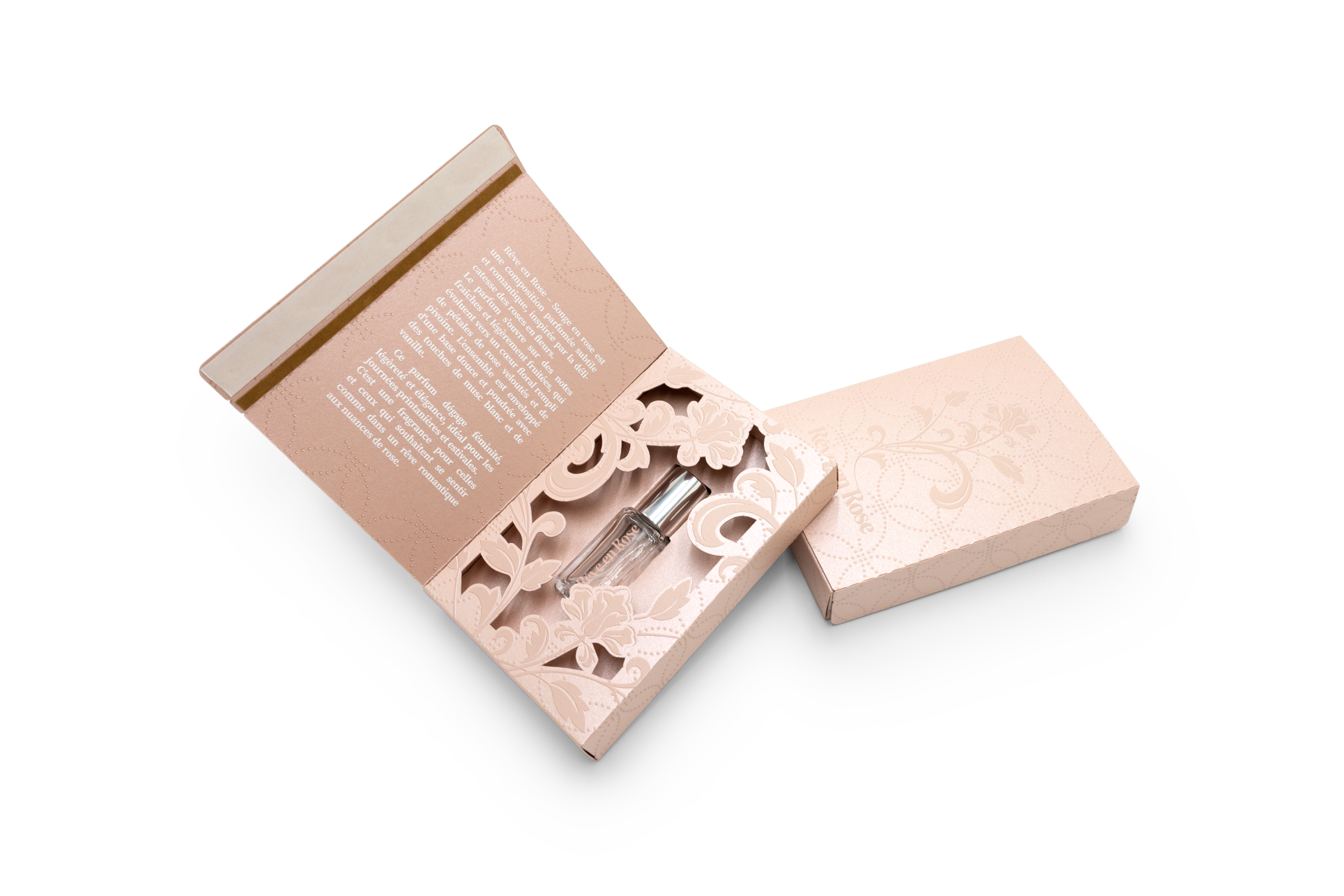
A mini cardboard case is a good choice for brands that want to give their sample a more elegant character. The vial can be inserted inside, closed with a flap, or placed in a small box. This format makes the sample look like a small product, not just a sample.
This is especially important for niche, luxury, and artisanal perfumes, where customers expect every detail to be carefully considered. The very moment of opening the case helps build a stronger sense of value.
In this format, premium papers, matte finishes, embossing, hot stamping, selective varnish, or very minimal typography work particularly well. It is not about overdecorating the packaging. Often, one well-chosen detail is enough to make the sample look elegant.
If we want to create a premium impression, maintain consistency with the full-size bottle, and offer a more refined customer experience, a mini cardboard case will work better than a standard card.
3. Pop-up packaging when we want to create a “wow” effect and tell the story of the fragrance
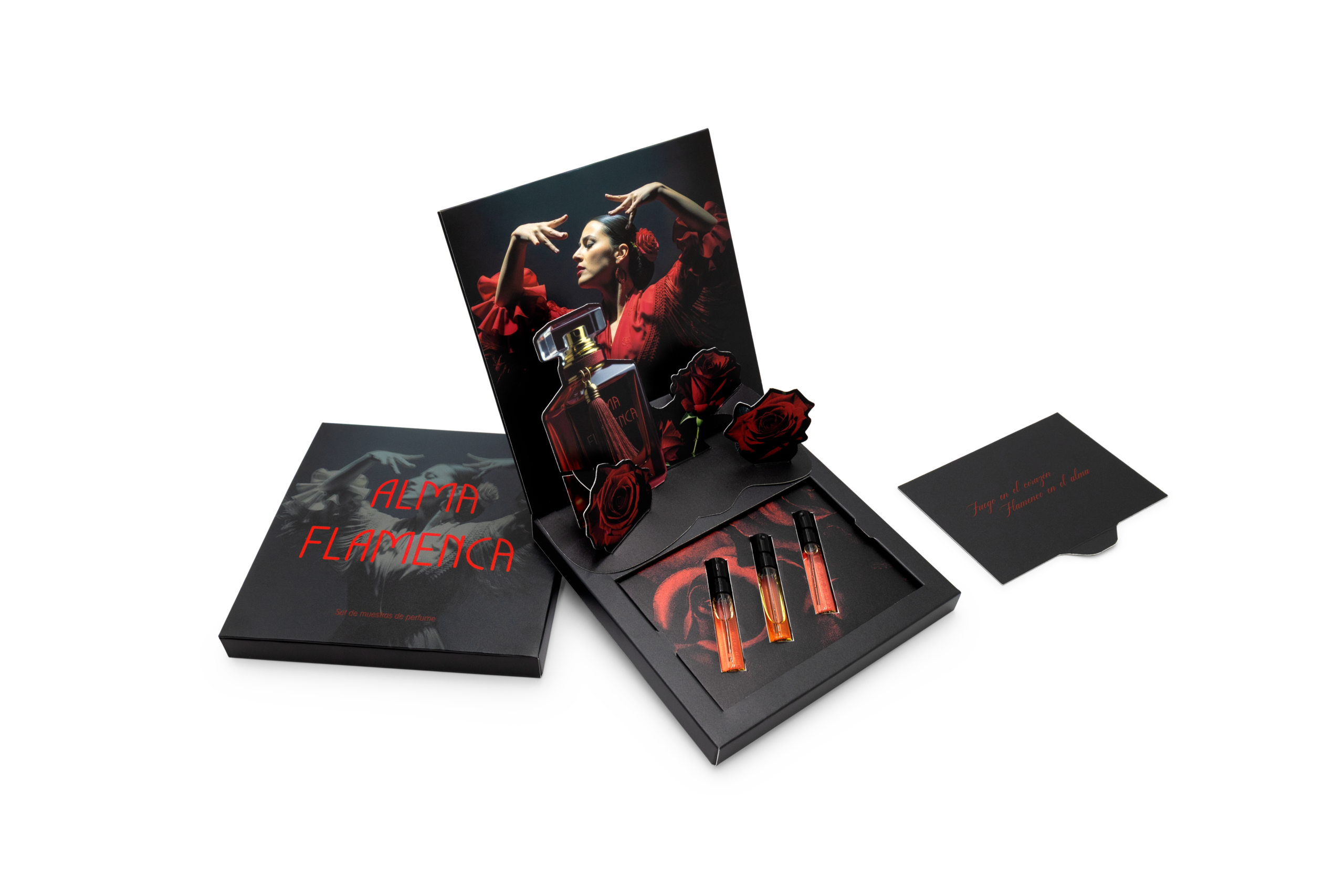
Pop-up packaging is a very interesting format for brands that want a perfume sample to be more than just a small vial. Once the packaging is opened, the customer sees a three-dimensional element — a graphic, a scene, a motif connected to the fragrance, or a brand symbol.
This solution works especially well when there is a specific story behind the fragrance. If the composition is inspired by a garden, a journey, a city at night, the desert, the sea, or a memory, a pop-up element allows that world to be presented visually.
This format creates an element of surprise. The customer opens the sample and immediately sees something memorable. In the world of perfumery, this is very important, because a fragrance often sells not only through the composition itself, but also through emotion, imagery, and mood.
Pop-up packaging works particularly well for new fragrance launches, limited editions, PR mailings, influencer campaigns, and niche brands that want to stand out through a more creative format.
It does not have to be a complicated structure. Sometimes one well-designed element is enough: a flower, a door, a window, a landscape, the silhouette of a bottle, or an abstract fragrance motif. What matters is that the pop-up is consistent with the brand’s character and strengthens the story behind the composition.
If we want the sample to be memorable, willingly shared, or treated like a small gift, pop-up packaging can be a very good choice. It is a format that turns a sample into a small brand experience.
4. Discovery set when we want to present the entire fragrance collection
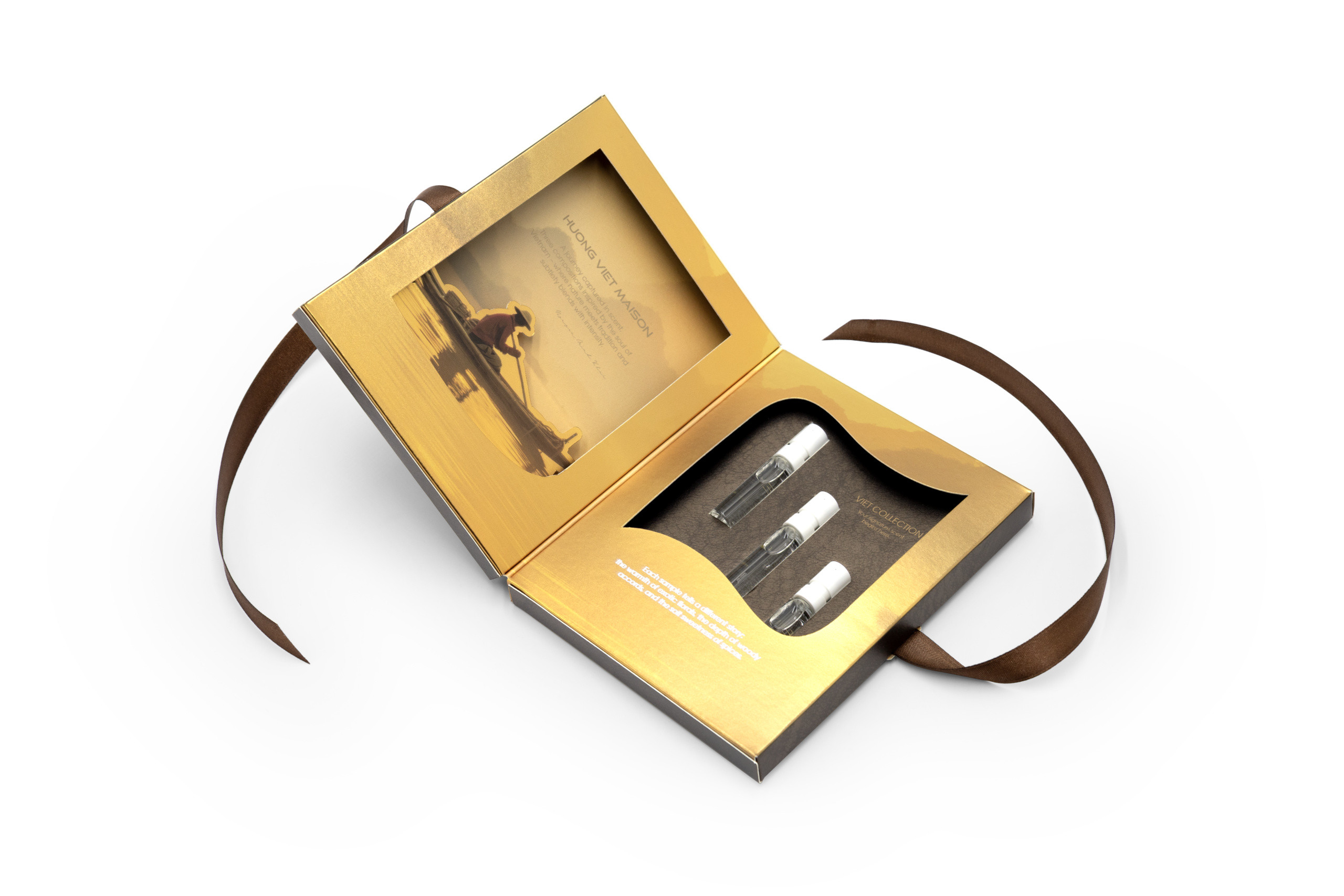
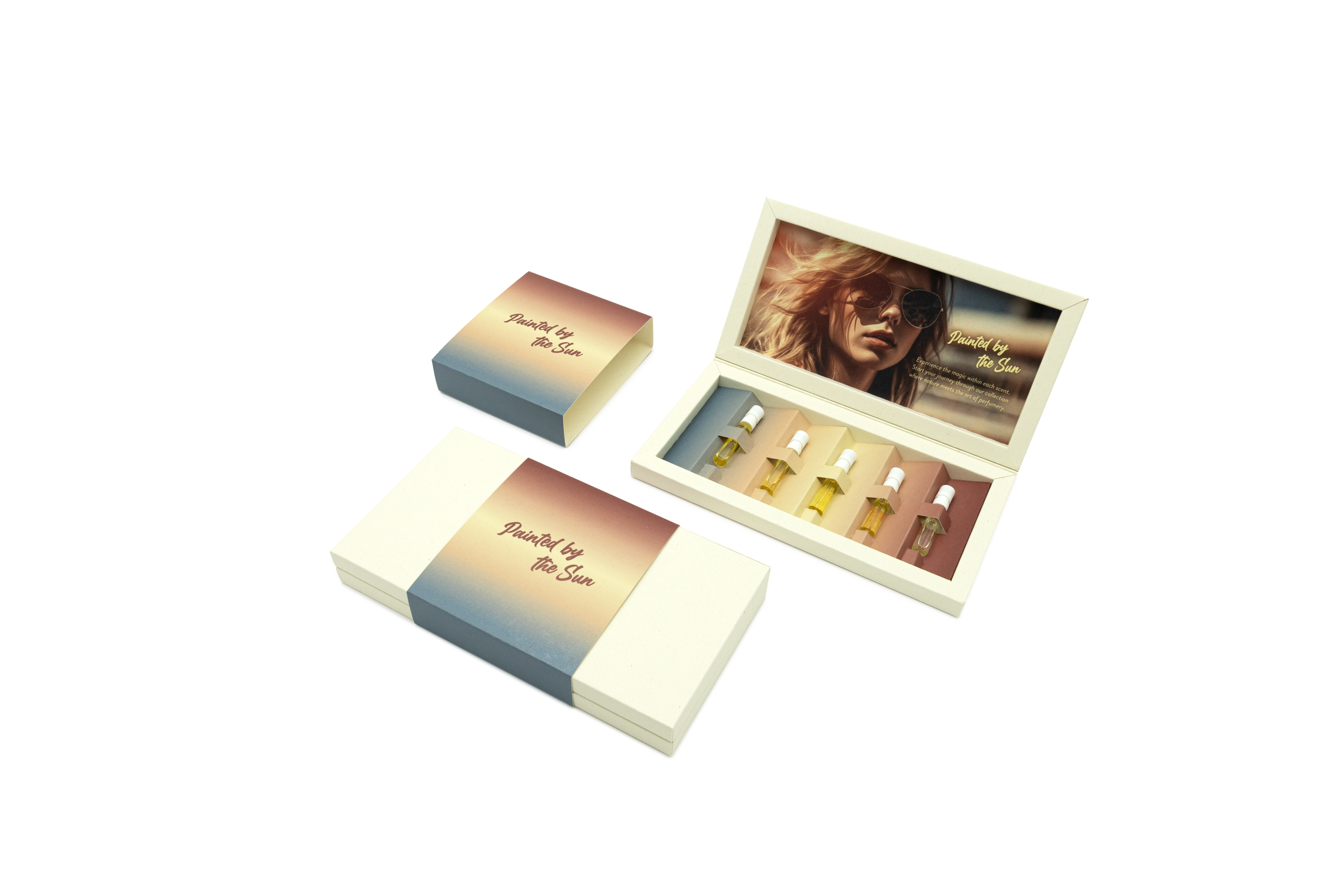
A discovery set is one of the strongest formats for perfume brands. Instead of receiving a single sample, the customer gets several compositions in one set. They can test them one by one, compare them, return to their favorites, and calmly decide which fragrance truly suits them.
It is a great solution for brands that have several fragrances and want to present their world as a whole. A discovery set can take the form of a box, a booklet, a folder, a sliding case, or an elegant set with separate spaces for each vial.
It is important that each sample is clearly described. The customer should know which fragrance they are testing, what makes it different, and when it is worth returning to it.
If we want to sell samples as a product in their own right, support the choice of a full-size bottle, or present the entire collection, a discovery set will be one of the best formats.
5. Shipping packaging for e-sampling when we want to reach customers directly with samples
If samples are to be sent by post, added to e-commerce parcels, or used in online campaigns, the packaging needs to be not only attractive but also practical. It should be lightweight, flat, safe in transport, and easy to assemble.
In this case, flat cards with a secured vial, small mailers, folded folders, or self-mailing packaging work particularly well. The most important thing is that the sample does not move inside, does not fall out, and is immediately visible when opened.
E-sampling is a great solution for brands that sell online and want to give customers the opportunity to discover a fragrance before purchasing a full-size bottle. Well-designed packaging can serve a protective, informative, and sales-supporting function at the same time.
If a brand is strongly focused on e-commerce, runs mailing campaigns, or wants to add samples to orders, it is worth choosing a format designed specifically with shipping in mind.
How to choose the best format for your brand?
Choosing the right packaging for a perfume sample should not begin with the format itself, but with one important question: what role should this sample play for our brand? A sample added to online orders will be designed differently from one created to support the launch of a new fragrance. A discovery set, purchased by the customer as a first step into the full collection, will require a different approach again.
For simple promotional activities, lightweight and practical solutions work very well, such as a fragrance card with a vial. This format gives the sample structure and context: the customer immediately sees the fragrance name, the brand, the notes, and the key information. If, on the other hand, a brand wants to build a more elegant, premium experience, it is worth considering a mini cardboard case. The gesture of opening it, the quality of the paper, or a subtle finish can make even a small sample feel like a carefully designed product.
For brands that want to tell the story of a fragrance in a stronger way, more creative constructions can be a very interesting direction for example, pop-up packaging. This type of format allows us to show the inspiration behind the composition: a garden, a city, the night, a journey, a specific mood, or a brand symbol. The sample then becomes more than just a carrier for the fragrance. It becomes a small experience that is easier to remember.
If a brand has several compositions, a discovery set can be a very valuable solution. In the world of perfumery, customers often need time to choose their fragrance. They want to return to samples, test them at different times of the day, compare them, and see which composition truly suits them. That is why discovery sets work so well for niche and premium brands they do not sell just one sample, but invite the customer to discover the entire world of the brand.
Packaging designed for e-sampling is also becoming increasingly important, especially when samples are sent directly to customers. In this case, appearance matters, but functionality is just as important: the packaging should be lightweight, flat, safe in transport, and easy to assemble. A well-designed sample does not get lost inside the parcel, does not look accidental, and immediately communicates why it has been added to the order.
The most important thing is that the packaging format is consistent with the brand’s goal. A sample package does not have to be large or complicated, but it should be well thought out. In perfumery, a small format is often the beginning of a big purchasing decision. It is the sample that can make the customer stay with the fragrance a little longer, return to it after a few days, and eventually decide that they want the full-size bottle.