

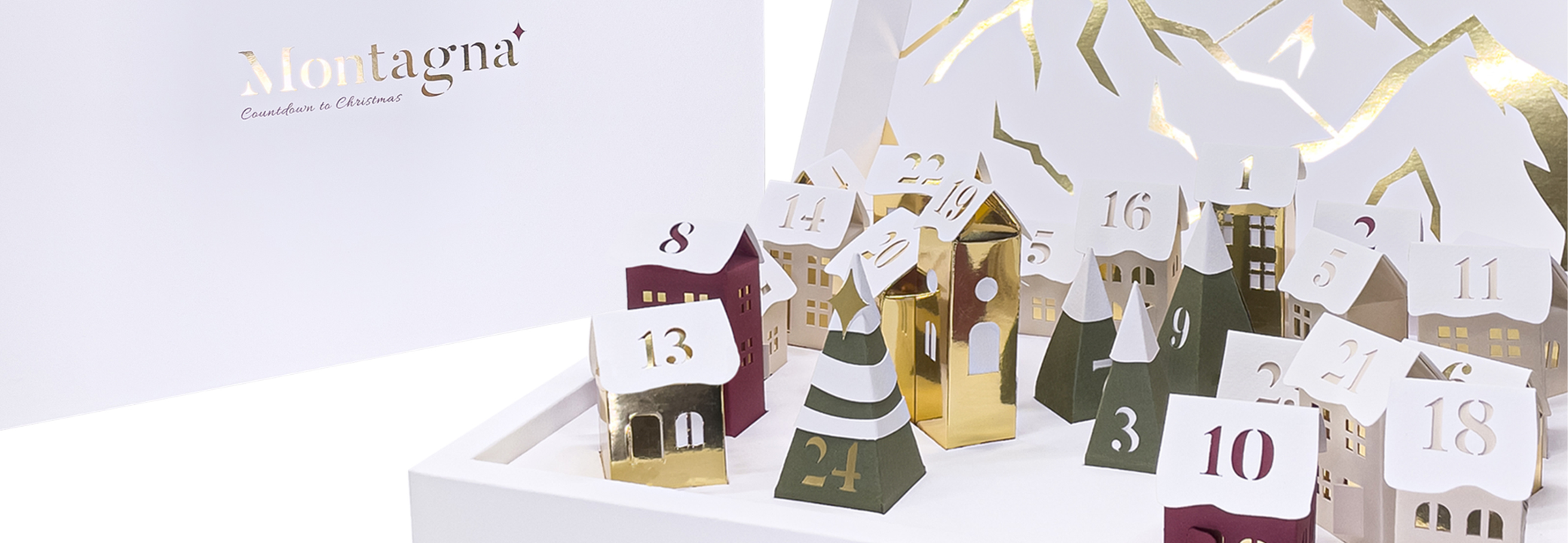
According to the latest analyses, the global advent calendar market reached a value of $1.87 billion in 2024, and forecasts predict it will grow at a solid 8.3% CAGR (compound annual growth rate) between 2025 and 2033, reaching as much as $3.74 billion by 2033. This impressive trend is driven by the growing diversity of products and increasing interest from both younger and adult consumers. Particularly noteworthy are themed and luxury calendars, especially those from the beauty segment, which represent some of the fastest-growing categories and have become a key part of many brands’ sales strategies.
Innovative approaches by manufacturers, licensing partnerships, and limited editions mean that advent calendars are no longer just a charming holiday accessory – they have become a fully-fledged marketing and sales tool.
Can you combine the childlike joy of discovery with the mature pleasure of exploring new cosmetics? You can. What’s more – you can build an entire seasonal ritual, sales model, and emotional experience around it, one that truly captures the imagination of both brands and consumers. This is exactly the story of beauty advent calendars.
For several years now, they’ve been more than just a winter gadget. They’re a phenomenon that creates bestselling products, strengthens brand image, and… makes people fall in love with the brand. Let’s take a closer look at why this trend is so powerful and why, once you open those 24 little windows, it’s hard to stop thinking about the next year.
Why brands can’t ignore this?
1. Sampling that generates revenue
Brands usually hand out samples “for free,” hoping that the customer will return for the full-size product. Advent calendars, however, flip this model upside down. Here, samples or their more refined versions, deluxe minis – are not free. The consumer pays for the opportunity to test them. What’s more, they perceive it as a luxurious upgrade to their daily routine.
This explains why well-designed calendars can sell out by the thousands before December even begins.
It’s what we might call premium sampling: the brand delivers an experience that the consumer willingly funds — generating revenue, strengthening loyalty, and building product awareness along the way. Can promotion and profit be combined more effectively? It’s hard to find a better example.
2. One campaign – thousands of unboxings
Imagine a marketing campaign that requires no media or production budget yet generates hundreds of videos, photos, stories, and reviews. That’s exactly how beauty advent calendars work. During the pre-holiday season, they become some of the most coveted unboxing objects – for influencers and everyday users alike.
On YouTube, you’ll find detailed walkthroughs of the contents; TikTok is flooded with energetic “open with me” clips; and Instagram feeds the algorithm with the daily ritual of unveiling each miniature gift. These are fully organic, authentic posts created by people who simply enjoy sharing what excites them.
The result? A single product campaign turns into a massive database of user-generated content spontaneous, enthusiastic, and with a reach no paid plan could ever replicate.
Even more importantly, each post isn’t just free advertising. It’s social proof – one of the most powerful sales tools in the beauty industry.
3. The FOMO effect and the power of limited editions
Advent calendars operate on a principle that sales experts know all too well: if something is rare and desirable, it has to be yours. The power of scarcity can work more effectively than any advertising slogan.
When a brand announces a limited number of calendars and no reprints, every minute of hesitation can mean a lost opportunity. Consumers track launch dates, set reminders, and… make their purchase the moment sales open. And when they hear that it’s “sold out in an hour,” the calendar instantly turns into a status symbol. “I got it. I made it. I’m among the chosen.”
From the brand’s perspective, it’s pure gold: a limited edition creates emotional tension that naturally speeds up buying decisions. What’s more, limited editions strengthen the brand’s positioning as exclusive and worth attention. Even if the products inside are identical to those available all year round, the limited edition effect builds a completely new story around them – one that elevates their perceived value and places the brand on a higher emotional level.
High value or high failure? It all depends on what’s inside.
As consumer expectations rise and experiences become more valued than the product itself, these seemingly simple boxes have turned into symbols of brand trust, carriers of prestige, and showcases of creative design and storytelling. Yet, as Chanel’s 2021 example shows, they can also become a potential PR minefield.
What went wrong? The problem lies in the fact that luxury brand customers don’t just buy perfumes, cosmetics, or accessories. They invest in a promise an experience, a story, a sense of brand responsibility, and above all, an honest message that luxury doesn’t end with the label. That’s precisely where Chanel stumbled.
The advent calendar released to celebrate the 100th anniversary of the iconic No.5 fragrance left customers disappointed because its contents didn’t live up to the premium narrative built around it. Those who paid over $800, instead of receiving a curated selection of exclusive miniatures, found items such as stickers, a string tag, and a DIY-style bracelet – objects too weak in quality to uphold the idea of a true “collector’s item.”
How to create an advent calendar your customers will love?
Creating an advent calendar that truly succeeds — both in sales and in brand perception — requires strategic thinking. Consumers are becoming more discerning, and the standards for “holiday surprise boxes” rise every year. Here are three pillars on which success is built:
1. Thoughtful curation – no fillers
The foundation of a great advent calendar is selection. Customers expect variety, but also thematic coherence. Random product choices are a clear red flag. Avoid repetition – four day creams in one box? To consumers, that signals either a lack of creativity or an attempt to clear old stock.
Balanced proportions make the calendar not only visually appealing but also functional. It gives the recipient a genuine sense of discovering the brand – exploring its range, textures, and personality. This builds loyalty and opens the path for future purchases long after December ends.
2. Packaging as an object of desire
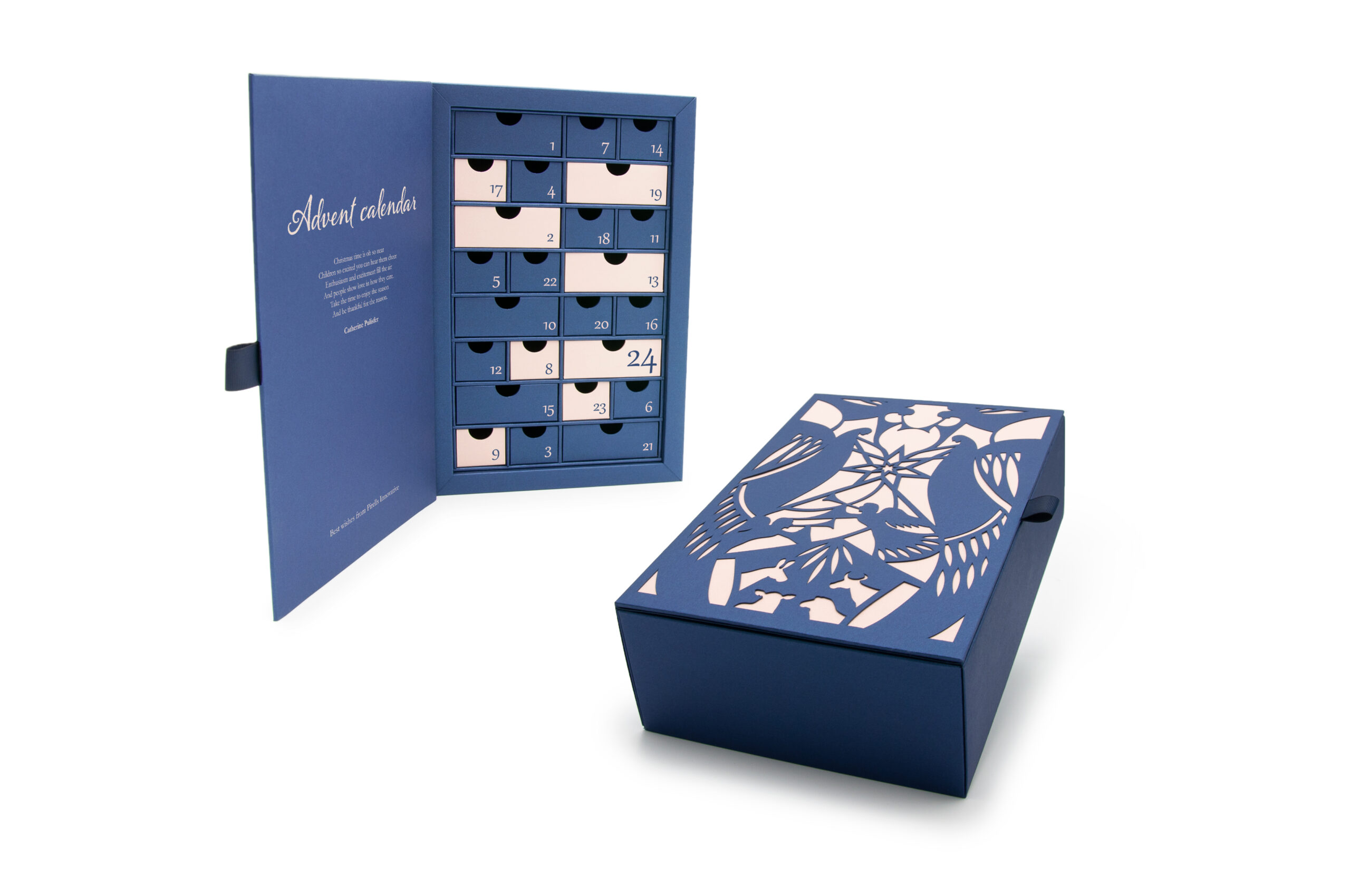
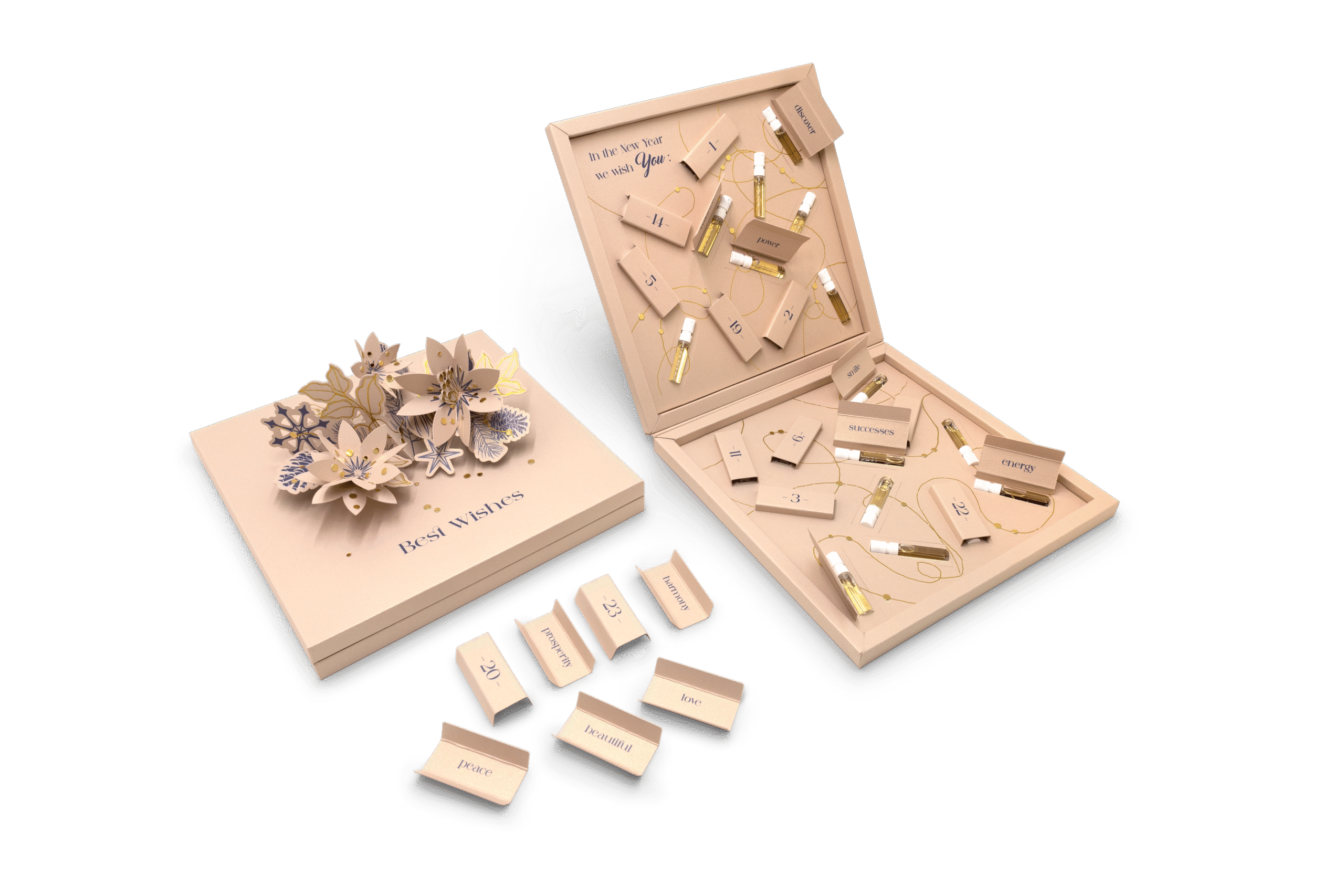
Packaging is part of the experience – and in the case of an advent calendar, it matters even more. The perfect design doesn’t just deliver a “wow” moment on first glance; it stays with the customer.
If you want the calendar to remain proudly displayed on a vanity or shelf, focus on:
- a solid and durable structure,
- aesthetically pleasing, tactile materials,
- cohesive brand identity,
- unique, eye-catching details that make the calendar feel special and worth keeping.
Such design choices not only deflect accusations of wastefulness or lack of sustainability, but also turn the packaging into a product in itself. The brand gains long-term presence in the consumer’s personal space — a quiet reminder that lasts well beyond the holiday season.
3. Clear communication of value
Transparency is the new premium currency. In the age of social media, reviews, and comparisons, customers want to know exactly what they’re paying for – and whether it’s worth it. The best calendars include, right on their product pages:
- a detailed list of contents,
- the percentage of full-size products,
- the real retail value of the box,
- short, engaging descriptions that position each mini product as a complete experience.
Clarity not only builds trust, but also protects against potential PR crises. In a world where a single unboxing video can make or break a collection, honest and transparent communication is the strongest shield a brand can have.
In summary…
Beauty advent calendars are not a passing trend they’re a well-designed blend of sensory marketing, sales strategy, and pure delight. They merge the emotional values of a brand with hard data and have the power to build long-term relationships. For brands, they’re a powerful tool; for customers, a cherished ritual. For both sides, they’re a shared pleasure rooted in the simple joy of unveiling small secrets every day.
If you’re a brand considering creating your own advent calendar – you’ve come to the right place. I’ll be happy to help you design one that will spark excitement long before December, and ignite anticipation the moment it appears in October.