

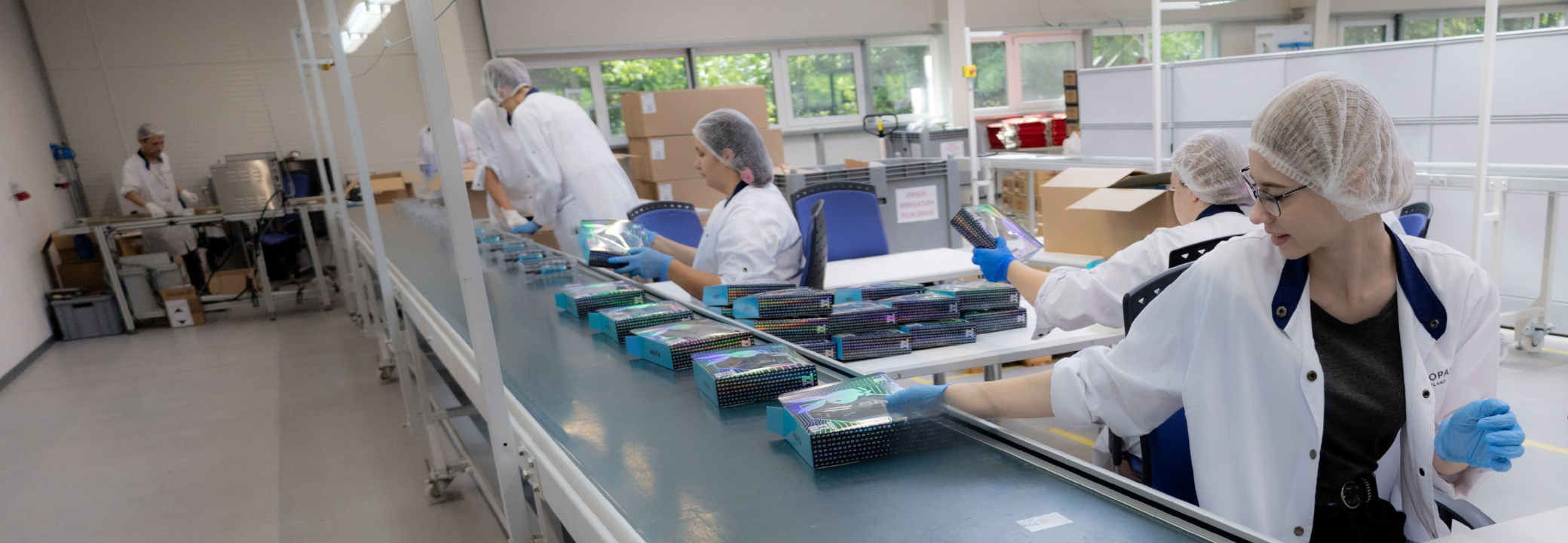
If you work on the brand side in the cosmetics industry, sooner or later you will encounter the topic of copacking. Whether you are launching a new product, scaling sales, or simply avoiding investment in your own packing line, the choice of partner has a direct impact on the final form in which the product reaches the end customer.
The challenge is that copacking is a fairly technical field, while most people on the brand side product managers, marketing teams, purchasing departments do not have specialist production knowledge. And that is completely natural. This is precisely why, instead of technical checklists, it is worth asking a few simple but well-targeted questions that reveal how a potential partner actually operates.
First: does the company have experience working with finished cosmetic products?
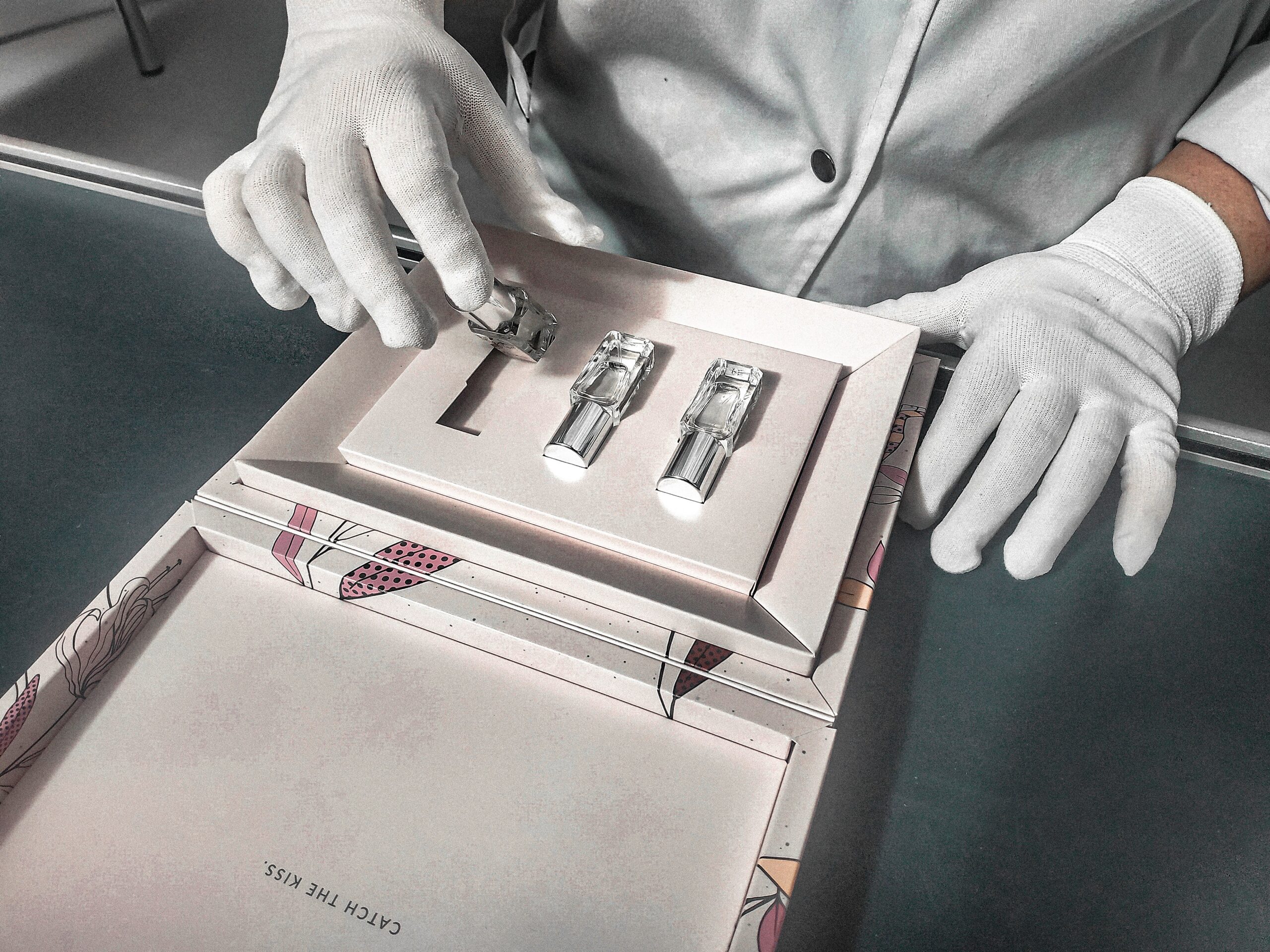
Packing sets or repacking cosmetics is fundamentally different from standard warehouse logistics. In this case, you are not working with “goods,” but with a product that is about to go directly to the end customer and will be evaluated not only for its contents, but also for its appearance.
Cosmetics are sensitive on many levels. On the physical side, glass bottles, lacquered cartons, gold foiling, matte laminations, or delicate prints are very easy to scratch or damage. On the brand image side, even a minor scratch, dent, or smudge can make the product look less than “new” and in the beauty industry, that perception is absolutely critical.
Companies without experience in handling finished cosmetics often underestimate these nuances. Cartons are opened and closed too frequently, products are handled without proper protection, and production lines are not adapted to premium packaging. As a result, small but widespread damages appear. Often not immediately visible.
The most painful part is that these issues usually emerge at the very end of the process. At the project stage, the gift set looks perfect: proportions are right, materials are carefully selected, and everything aligns visually. After execution, however, bottles turn out scratched, cartons dented, and the overall presentation loses its “premium look.” Not because the design was flawed, but because no one anticipated how delicate the packaging components were and how much care they required during packing.
For the brand, this leads to difficult decisions: accept a lower visual quality or withdraw part of the batch, incurring additional costs and delays. That is why experience with finished cosmetics is not a “nice to have,” but the foundation of safe and reliable copacking.
The second key area is the way manual packing of sets is handled
The vast majority of cosmetic sets are assembled manually. This involves folding cartons, placing several products at once, adding leaflets, samples, fillers, or protective foils. Each of these steps is performed by a human and wherever manual work is involved, variability naturally appears.
If the packing process is not clearly defined and consistently enforced, differences between sets quickly emerge. At first glance they may seem insignificant, but across an entire batch they become noticeable. In one box the cream faces forward, in another it faces backward. In one set the products are neatly secured in the filler, in another they move loosely inside. For the customer these may be small details, but for the brand they signal a lack of predictability in the final outcome.
Lack of standardization has further consequences. As volumes increase, so does the risk of errors: missing components, incorrect leaflets, or mixed-up set variants. Moreover, without clear visual instructions and quality checks, even an experienced team will pack “by feel,” which never produces repeatable results.
For the brand, this means losing control over how the product looks at the moment of opening. And in cosmetic sets, especially gift sets that first moment is crucial. It is when the customer forms an opinion about quality and attention to detail, an impression that is difficult to reverse later.
Another important factor is the ability to work with multi-product and multi-variant sets
Cosmetic sets are almost never fully identical. They differ in leaflet language, product configuration, additional elements, and often the target market. From the brand’s perspective, these differences are usually obvious, but at the packing stage especially in manual operations they are easy to overlook.
The more variants run in parallel, the greater the risk of errors if the process is not clearly planned and distinctly labeled. Without clear SKU differentiation, products begin to “blend together”: the same components end up in different sets, and packers must rely on memory or intuition instead of clear guidelines.
In practice, this leads to situations where a set intended for the German market includes a Polish-language leaflet, or a promotional version receives an element from a different configuration. Such errors are rarely detected during packing, they surface later during distribution or, worse, at the end customer level. This is why multi-level in-process control and approval systems are essential.
For the brand, these mistakes mean not only additional costs related to complaints or rework, but also loss of trust among retail partners and customers. Experience with multiple variants and SKUs is therefore not just about “managing logistics,” but about designing processes that minimize error risk even as project complexity increases.
It is also worth asking how the company handles short runs and “last-minute” projects
It is especially important to ask how a company manages short production runs and projects delivered under extreme time pressure. These conditions are typical for promotional sets and PR boxes often produced in small quantities, under tight deadlines, and with many components requiring precise manual handling.
Not every copacking company is willing or able to operate in this model while maintaining high execution quality, visual consistency, and attention to detail which are crucial for PR sets. And it is precisely these details that shape first impressions, whether for influencers, media, or business partners.
It is worth remembering that delays at this stage can undermine months of prior work: communication strategies, material production, contracted publications, or a carefully planned product launch. This risk is particularly high when sets are part of an influencer campaign or a launch tied to a fixed, non-negotiable date. That is why flexibility, experience with short runs, and the ability to respond quickly to changes should be among the key criteria when selecting a copacking partner.
Another critical question concerns quality control during the packing process
In cosmetic copacking, quality control does not mean laboratory testing, but viewing the product through the customer’s eyes. What is “finished goods” for a manufacturer is an experience for the customer – opening, discovering, and evaluating.
This is why control cannot be limited solely to the packing process itself. Even with a perfectly designed workflow, issues can arise from the quality of components especially when they come from multiple suppliers. Products may have defects, packaging imperfections, or printing errors.
That is why responsible copacking companies also inspect the products themselves: checking for packaging flaws, print completeness, or correct batch numbers on perfume bottles. These issues must be identified during packing to ensure that only flawless products reach the customer.
The greatest risk appears when final inspection is merely symbolic or done “by eye.” A missing component, a crooked carton, or a poorly trimmed leaflet can ruin the entire experience even if the cosmetic itself is perfect. In the beauty industry, this is particularly dangerous, as a premium image is built through consistency and attention to detail at every stage.
Quality control of the final result is therefore not an add-on to copacking it is an integral part of the service. It is the moment when a copacking company proves it can deliver the product exactly as the brand intends to present it to the world.
In summary
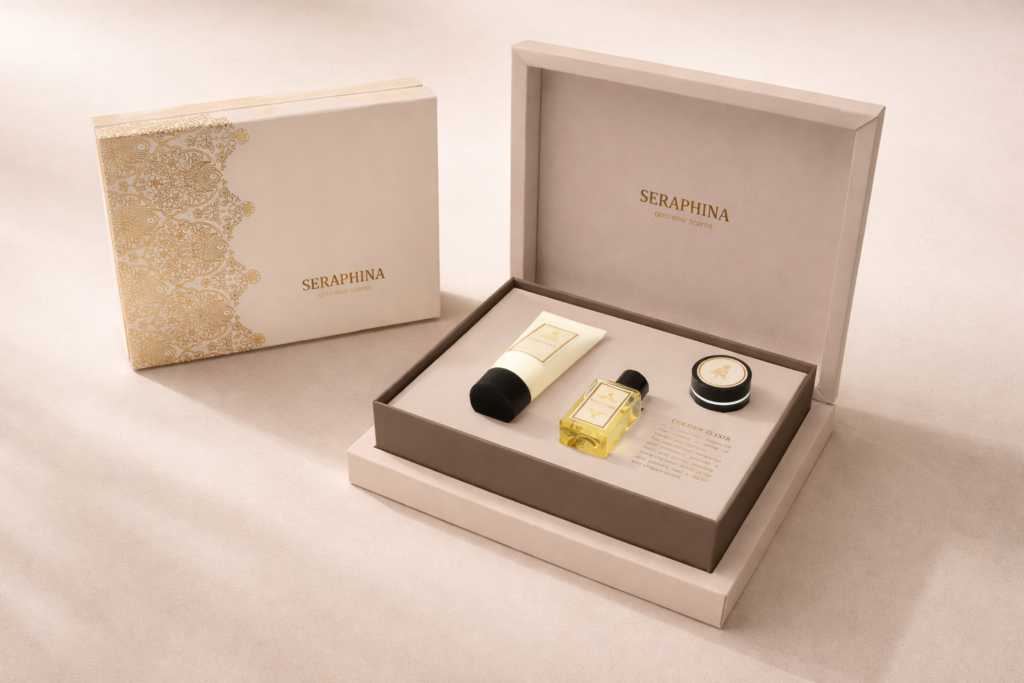
Cosmetic set copacking, labeling, and repacking are often perceived as “logistics” and treated as secondary processes. In reality, they have the greatest impact on the customer’s first impression on the moment of opening, when the brand experience takes tangible form.
For brand-side teams, the goal is not to master technology or machinery, but to understand where the risks lie and what consequences can result from seemingly minor decisions. Even the best cosmetic can lose its value if the set is incomplete, poorly packed, or looks careless. Conversely, well-executed copacking can elevate perceived quality, strengthen brand image, and support sales.
The key, therefore, is asking the right questions and choosing a partner who understands that packing is not just an operation, but a vital part of building the customer experience. Because at the end of this process, there is always the customer and your brand.